Emergency Garage Door Repair Near Me: What Lakewood Homeowners Should Do First
If your garage door has stopped working, the first thing to do is stop pulling on it. A door that quit halfway down with a broken spring still holds serious tension in its cables, and forcing it the rest of the way is exactly how people get hurt. Your real first decision isn’t which company to call. It’s whether the door is safe to leave, whether the car can get out, and whether your home is still secured. Get those three questions answered, and the rest is a phone call.
If you’d rather have someone walk through it with you, call (833) 681-3532. Estimates are free, and we can talk you through the safe next step even if you end up booking a repair for the morning.
Is the door in a safe failure state, or is it an active hazard?
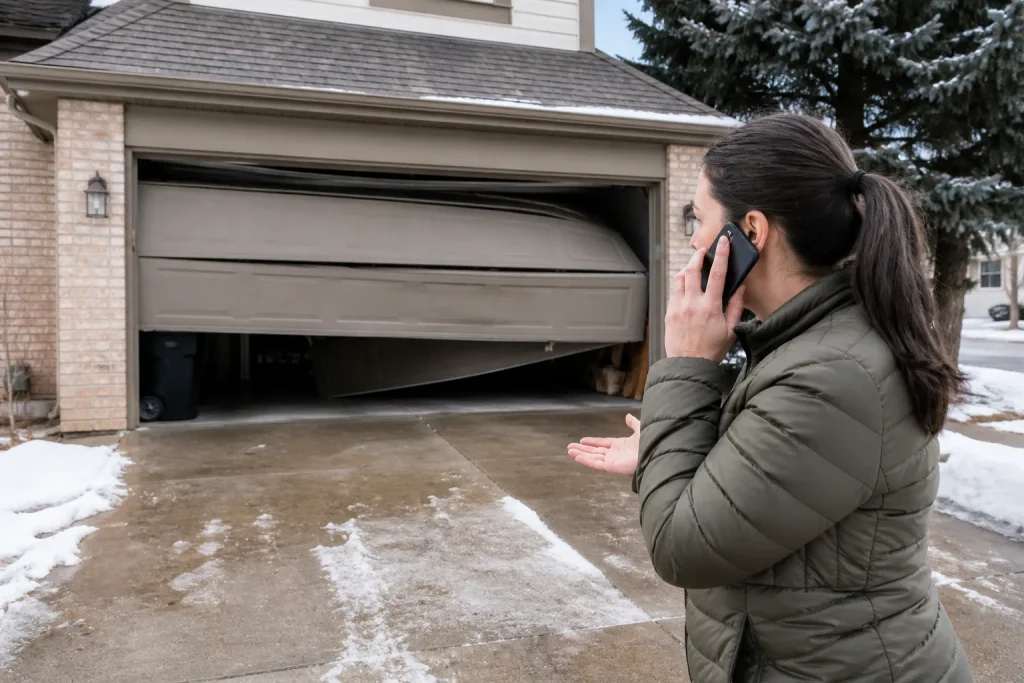
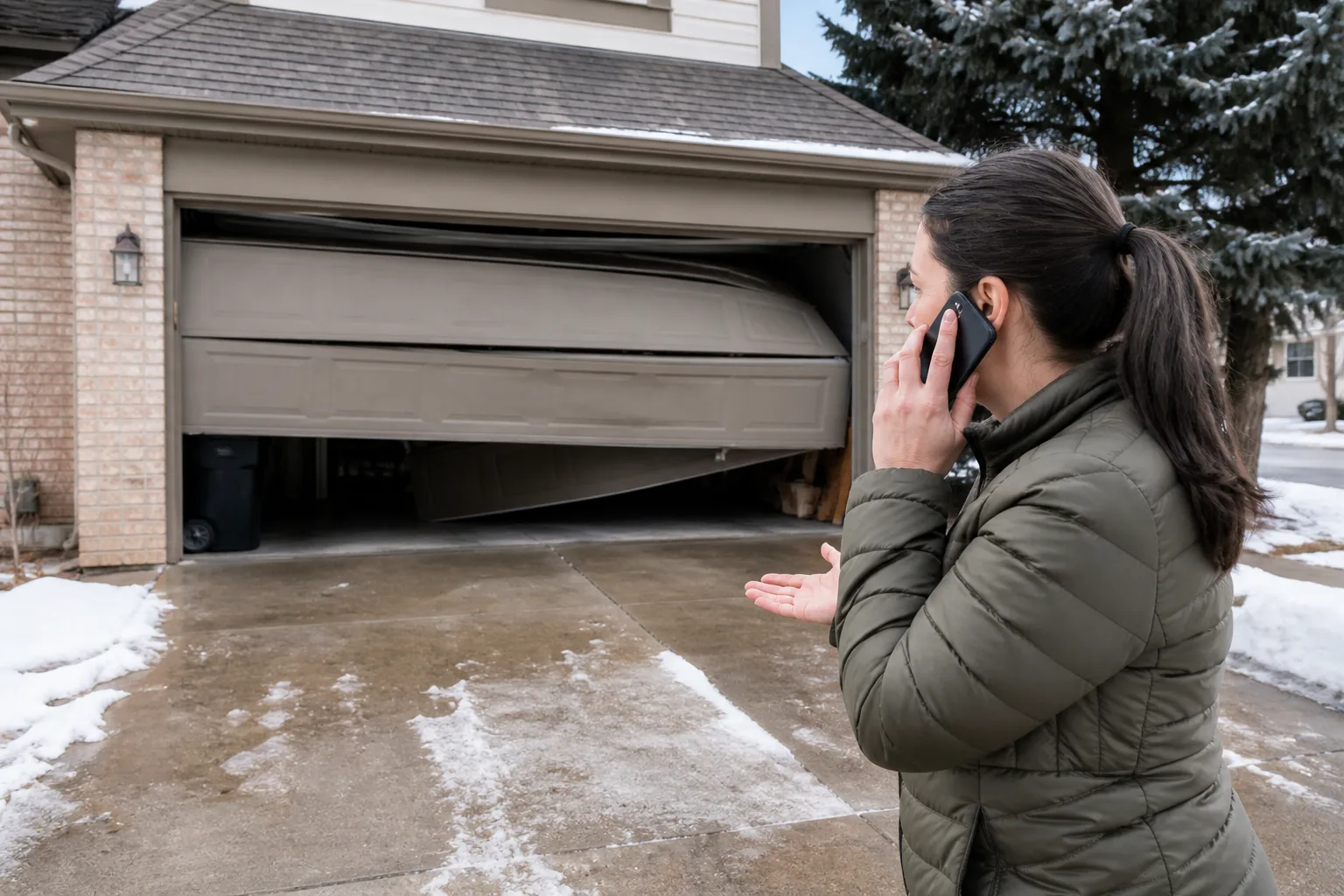
Before you touch anything, look. A garage door that fails quietly is a different animal from one that fails under load. The safe failures announce themselves and then stay put: the opener runs but the door doesn’t move, the door reverses immediately, the remotes stop responding, the door sits crooked but solid. The dangerous ones leave stored energy waiting to release. Here’s what to check from a distance, with your hands off the door.
- Cables: Look along both sides of the door near the bottom corners and the drums up top. A cable should be taut and evenly wound. A loose, slack, frayed, or clearly off-its-drum cable means the door is not safe to operate or lift. Stay clear.
- Springs: On a torsion setup, look at the horizontal bar above the door. There’s usually a visible gap in a torsion spring when it has snapped. On extension springs, look for a stretched or dangling spring along the upper tracks. A broken spring means the door is being held by the opener or by you, and neither is reliable.
- Tracks: Run your eyes down each vertical and horizontal track. A bend, a kink, or a roller popped out of the channel can send the door off its path under load. Don’t try to bend a track back into shape with the door attached.
- Door position: A door sitting unlevel, hanging at an angle, or resting on one side is under uneven tension. Leave it exactly where it is.
If any of those checks look wrong, don’t run the opener, don’t pull the manual release, and don’t try to lift the door by hand. Springs and cables store enough force to injure a person badly, and this is a job for a trained technician. In Lakewood, that’s a call, not a project.
How do you disengage and secure a door the right way?
The manual release – the red handle hanging from the opener rail – is designed for a door with working springs, not a broken one. That distinction matters. Pull the release on a door with a snapped spring and the full weight comes down at once, which is how doors get bent, tracks get torn, and people get hurt. If you suspect a spring or cable has failed, leave the release alone and secure the opening another way.
If the door is intact and the opener has simply quit, disengaging is reasonable. Pull the release straight down and back, then lift the door by hand. A healthy door should rise with steady, moderate effort and stay up on its own. If it feels heavy, drops when you let go, or won’t stay up, stop and put it back down gently. That’s a spring problem talking to you, not a bad opener.
To secure the home when the door won’t close:
- Park the car outside if you need to get out, or leave it in and use another exit.
- Lower the door as far as it will safely go by hand, then block it from rising with a sturdy brace against the bottom panel if you can do so without forcing anything.
- Lock the entry door between the garage and the house, and treat the garage as an open room until it’s repaired.
For a door stuck open in Lakewood, the priority is getting it closed and latched, even if that means a temporary brace until a technician arrives. That’s a repair call, not a replacement.
Which garage door failures are real emergencies?
Not every breakdown needs a middle-of-the-night response. Sorting them honestly saves you money, and it stops a panicked search from turning into a rushed decision. Here are the three that qualify as genuine emergencies, and the ones that can usually wait for a normal appointment.
The three true emergencies:
- Broken spring on a heavy door. The door may be hanging open or half-closed with nothing but the opener holding it. It’s a hazard to anyone who walks under it and a security gap if it’s the only way in.
- Cable snap with the door in motion. A snapped cable can whip and the door can drop or skew on its way down. Stop operating it and keep people and vehicles clear.
- Door off track under load. A door that has jumped its track and is leaning or jammed is unstable. Don’t run the opener and don’t try to walk it back on.
Usually fine until morning:
- Opener motor dead, door closed and locked.
- Remote or keypad stopped working while the wall button still does.
- Door reverses on contact, or the safety sensors are misaligned.
- Noisy operation, a single squeaky roller, or a door that closes but sits slightly uneven.
That last group is a nuisance, not a hazard. In Lakewood, we can usually get to those on a normal repair visit, and the price is quoted and agreed before any work starts. When in doubt about which bucket you’re in, call and describe it. A short conversation sorts it out.
What should you tell a technician so they arrive with the right parts?
The single biggest cause of a wasted second visit is a vague phone description. When you call, the person on the other end is trying to figure out the brand, the door type, and which component failed – so they can load the right parts and fix it in one trip. “It’s broken” doesn’t do that. A few specific details do.
- Door type: Is it a sectional door with horizontal panels, or a single-panel tilt-up? Roughly how wide and tall?
- Brand if you can find it: Look on the door’s end stile or bottom bracket for a label. LiftMaster, Chamberlain, Genie, Clopay, Amarr, Wayne Dalton, Craftsman, and Raynor all show up in Lakewood garages, and knowing the brand helps a technician match the right springs, cables, and opener parts.
- What it’s doing: Won’t move at all, moves a little then stops, drops fast, hangs crooked, runs but the door doesn’t follow, reverses on its own.
- What you can see: A gap in the spring, a sagging cable, a bent track, a door resting unevenly.
- Whether the car is trapped: This changes the urgency and the plan.
If you don’t know the brand, that’s fine – a photo of the door and the opener housing tells a technician most of what they need. Diagnosis first, then a recommendation. We’d rather fix the door you have than steer you toward a new one you don’t need.
How does emergency pricing work in Lakewood, and what’s a fair surcharge?
A fair after-hours call carries an honest surcharge for the inconvenience of the hour, and you’ll hear the number before anyone touches the door. That’s the line. A legitimate charge is quoted up front and stays put. Price gouging looks like a number that appears only after the work is done, or a vague “emergency fee” that balloons when you’re standing in a cold garage at 10 PM.
Here’s how to keep it clear-headed:
- Ask for the service charge and the repair estimate separately, so you know what you’re paying for the call versus the fix.
- Ask whether the after-hours surcharge applies to the whole visit or just the call-out.
- Get the repair price quoted and agreed before work starts. The written estimate sets the final price.
- Be wary of anyone who won’t give a range over the phone or insists on a full replacement before they’ve looked at the door.
In our experience, most Lakewood emergencies turn out to be a single broken spring or a snapped cable, both of which are straightforward repairs on a door that’s otherwise sound. That’s the repair-first approach we take: figure out what actually failed, fix that, and leave the rest of your system alone. A quote that jumps from a spring repair to a new door without a look at the hardware is a red flag.
When to call a pro: any time a spring, cable, or track is involved, or the door is hanging under load. Those aren’t DIY. Springs are the most dangerous part of any garage door system, and we handle them so you don’t have to.
Related services in Lakewood
Once the emergency is sorted, it’s worth getting the rest of the system checked. We handle garage door repair for the door itself, garage door opener repair when the motor or controls are the problem, and garage door installation when a door is genuinely past saving. If your opener brand is unfamiliar to you, our Lakewood Garage Door Repair Co team can usually identify it from a photo.
The Bottom Line
When a door fails, the order of decisions is safety first, security second, repair third. Check the cables, springs, and tracks from a distance. Leave a door with a broken spring or snapped cable exactly where it is. Secure the opening by hand only if you can do it without forcing anything. Know that a broken spring on a heavy door, a cable failure in motion, and an off-track door are the emergencies – the rest can usually wait for a normal visit. And when you call, describe the door and the failure clearly so a technician arrives with the right parts.
If you’re in Lakewood and need help, Lakewood Garage Door Repair Co offers free estimates – call (833) 681-3532. Our technicians have up to 15 years of experience, the price is quoted and agreed before any work starts, and we fix the system you already own.
Frequently Asked Questions
Can I open my garage door by hand if the spring is broken? No. A door with a broken spring is far too heavy to lift safely by hand, and the cables may be under tension. Leave it closed or exactly where it is and call for a repair. Attempting to lift it can cause serious injury.
Is a broken garage door spring an emergency? It’s an emergency if the door is hanging open or half-closed over a walkway or driveway, or if the garage is your only secure entry. If the door is fully closed and the home is secure, it can usually wait for a normal appointment. Call (833) 681-3532 and describe the situation for an honest read.
Will the after-hours price change once the technician sees the door? A fair after-hours charge is quoted up front and stays put. The written estimate sets the final price, and you agree to it before any work starts. If a number appears only after the repair, that’s a warning sign.
How fast can you get to a garage door emergency in Lakewood? For a true emergency – a door hanging under load, a snapped cable, or an off-track door – call (833) 681-3532 and we’ll do what we can to get help out quickly. For non-critical issues, a normal repair visit is usually the right move and costs less. Either way, the estimate is free.
Written by the team at Lakewood Garage Door Repair Co.
Need Garage Door Help?
Call Lakewood Garage Door Repair Co - the local pro we connect you with is licensed and insured, here with fast after-hours help in Lakewood.
(833) 681-3532